Designing a compliance-first SaaS that transforms dense legal complexity into intuitive workflows non-technical users can navigate confidently.
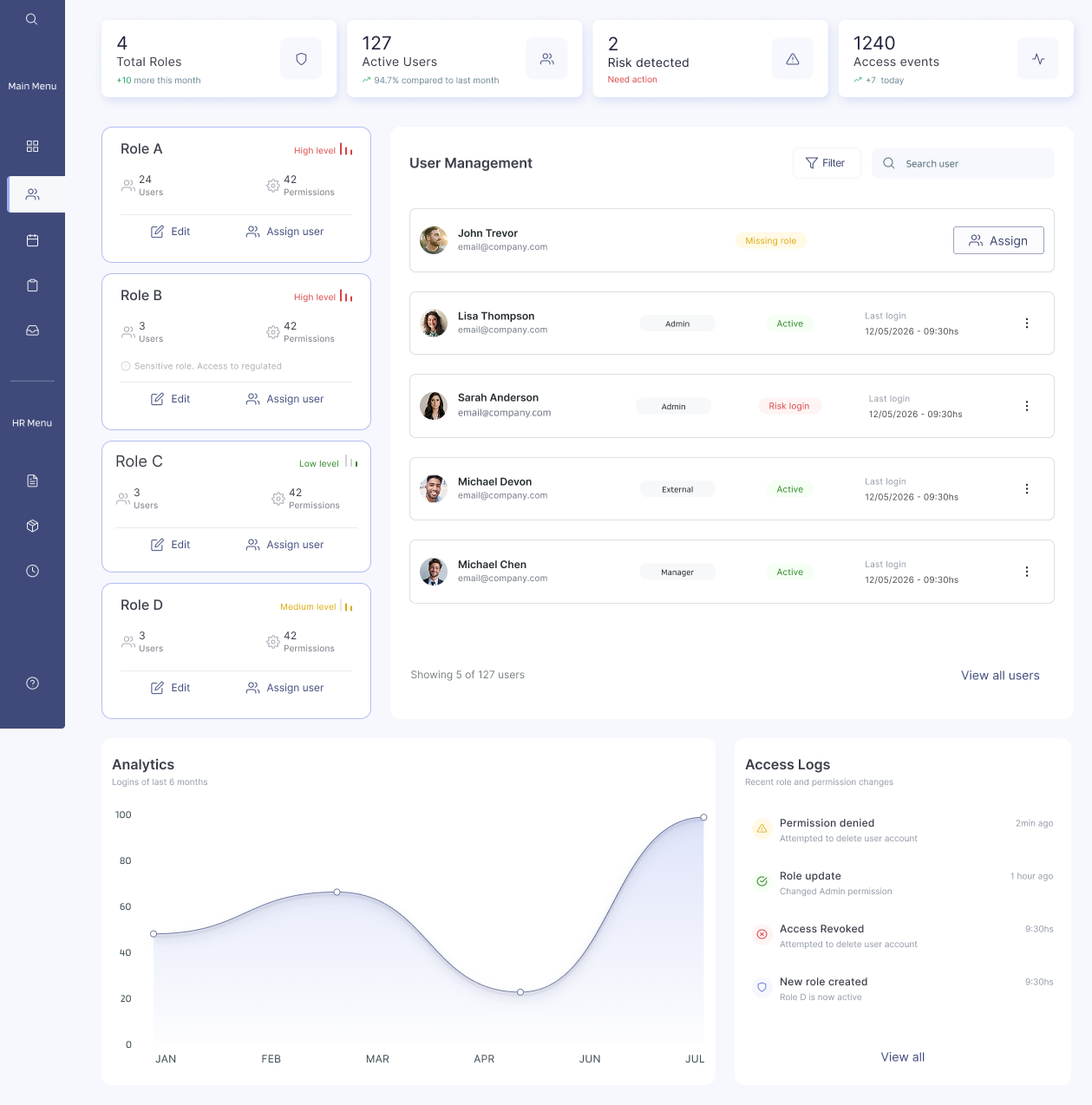
A SaaS platform for organisational management and regulatory compliance — covering GDPR, occupational health and cross-departmental processes. The product required granular access control, strict data separation between organisations, and auditability designed into every user action.
I led the project end-to-end: from translating legal requirements into product structure, to defining the IA, designing all 10 modules, and working directly with stakeholders and engineering to ship it.
- 850+ Excel rows tracking certifications manually
- Legal documents written for lawyers, not end users
- Manual email reminders for every deadline
- No visibility into who approved or signed what
- Undocumented, error-prone audit processes
- Guided workflows enforce compliance automatically
- Legal requirements translated into step-by-step UI
- System-triggered notifications based on real-time status
- Audit trail integrated into every action
- Role-based access scoped per organisation type
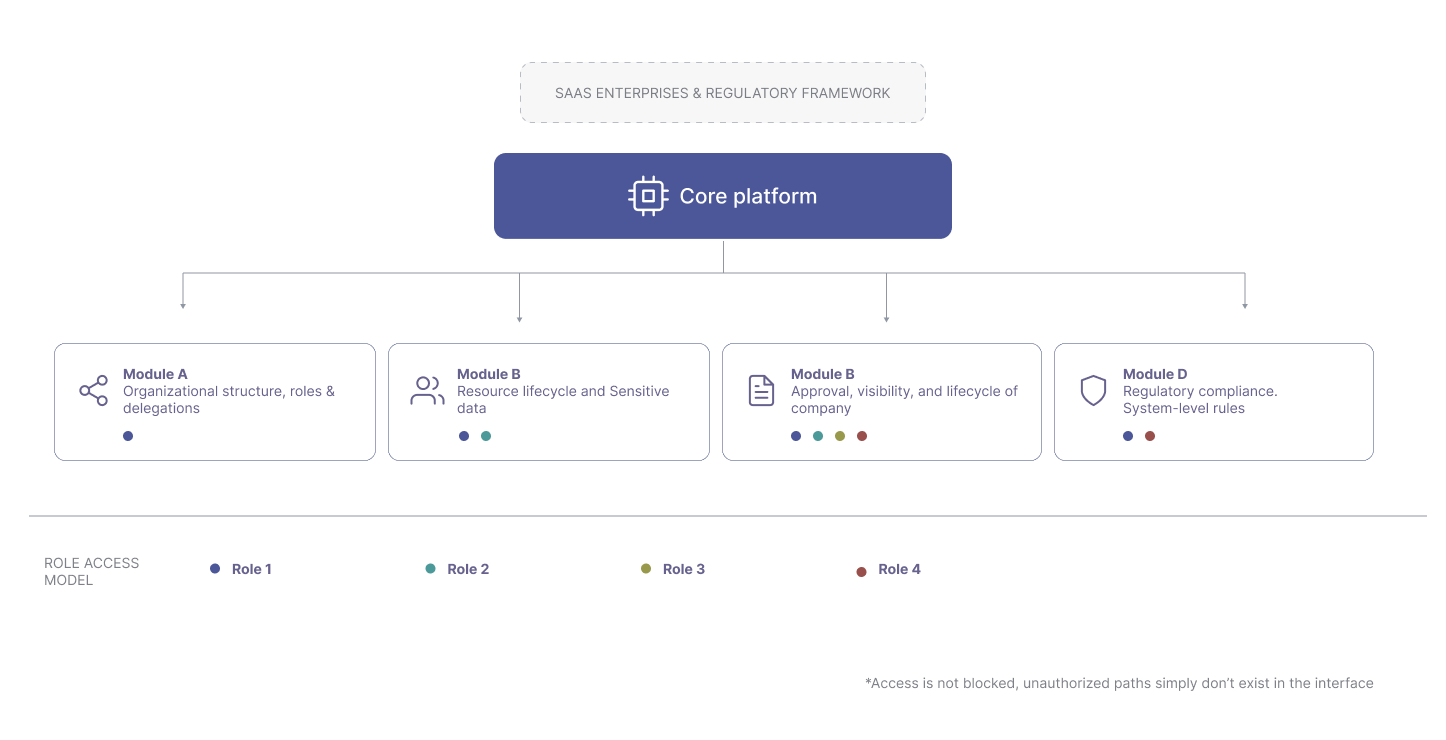
Analysed regulatory frameworks to extract mandatory processes — then designed the UX to enforce them invisibly, not through warnings or error messages.
Structured navigation to make unauthorised actions structurally impossible — not blocked by alerts, but simply absent from the interface.
Roles as configurable containers, not fixed profiles — transforming complex permission matrices into something admins could manage with confidence.
Users couldn't take non-compliant paths — not because the interface blocked them, but because those paths simply didn't exist.
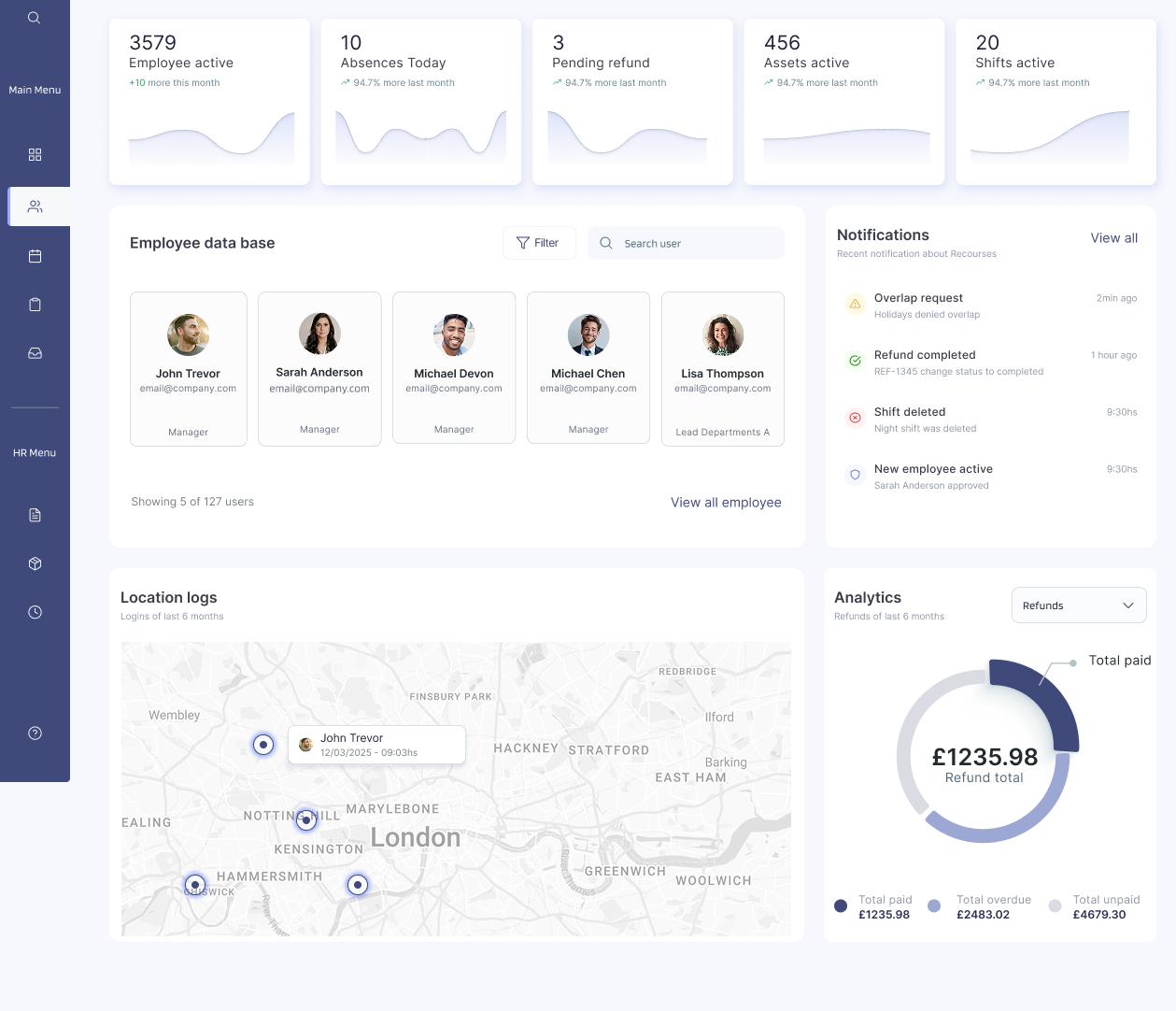
10 interconnected modules sharing unified logic with strict data separation — designed as a coherent system, not a collection of screens. Every module shares state, permissions and audit logic.
Instead of fixed permission profiles, roles were designed as flexible containers. Non-technical admins could manage who sees what without needing to understand the underlying data model.
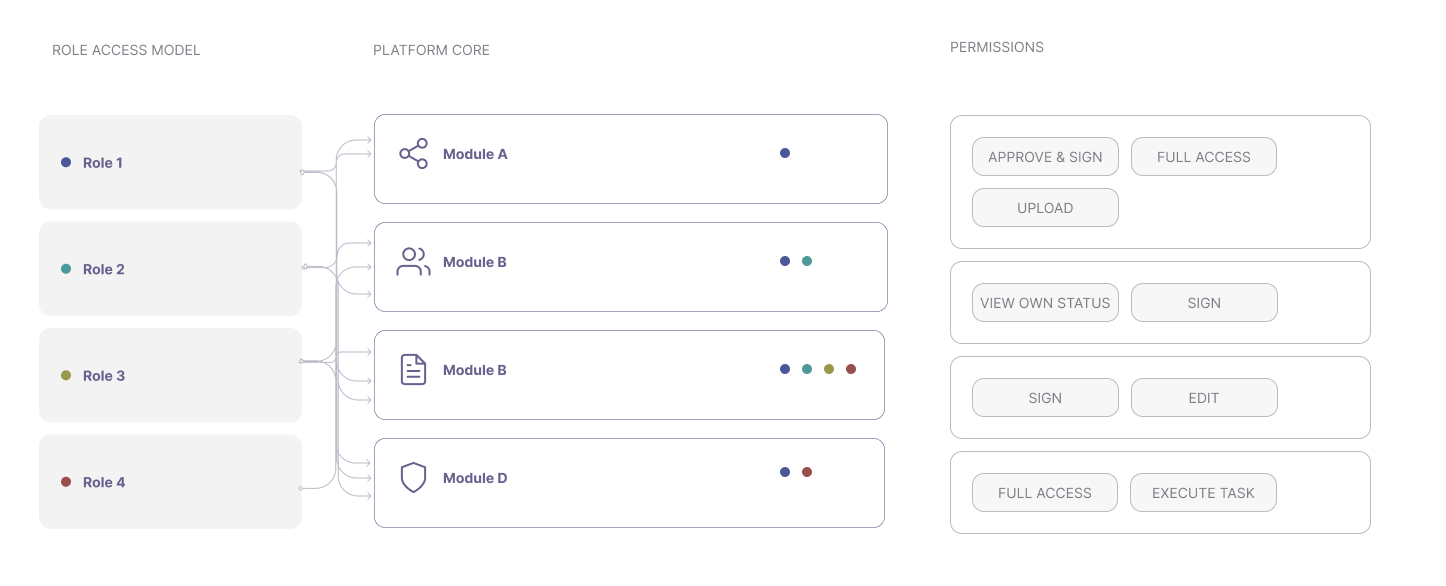
Document assignment, review, approval and signature were structured through predefined flows that enforce the correct actor involvement — removing the possibility of skipping a required step.
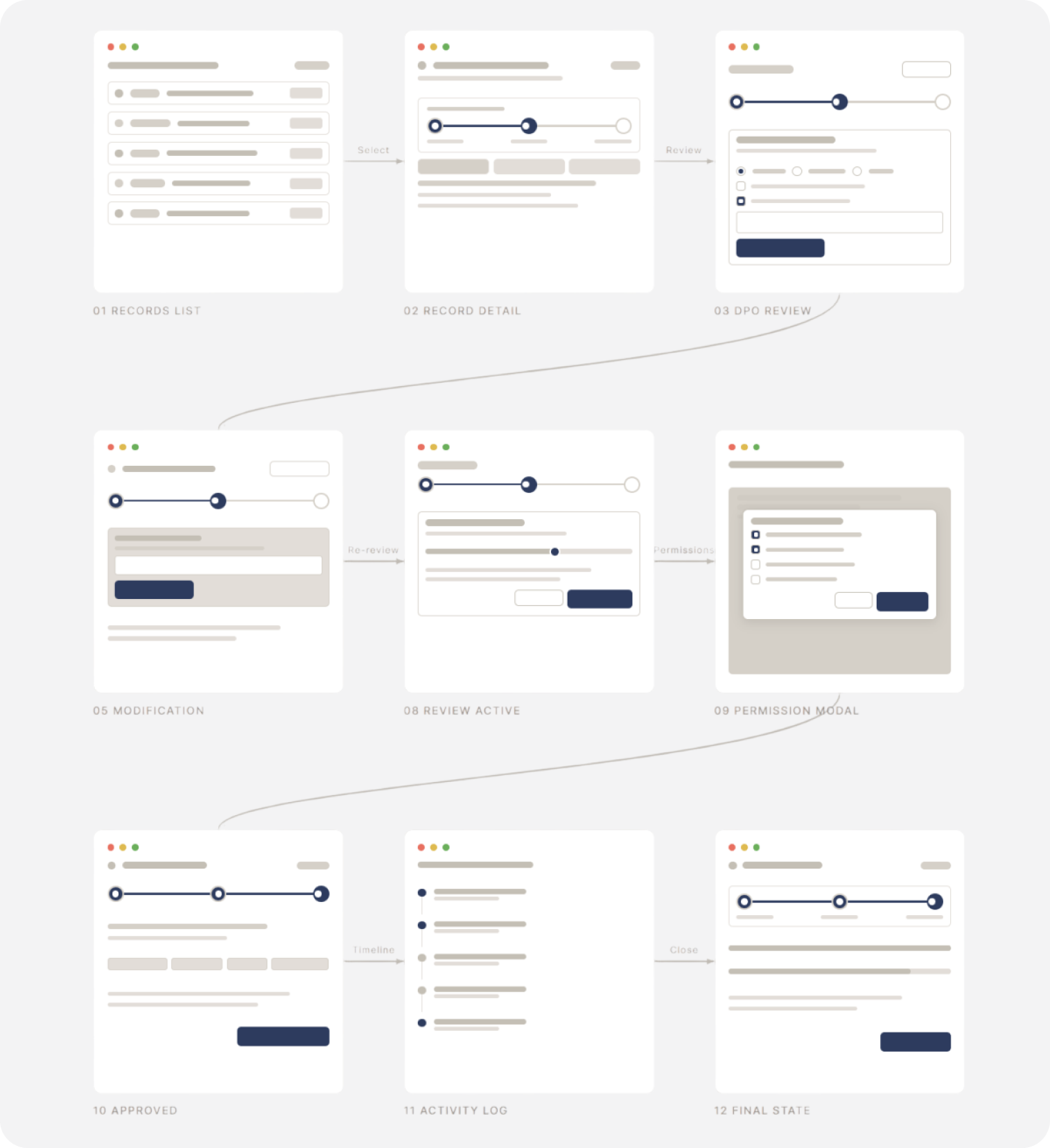
Explore the full compliance workflow in action. Interact with the dashboard, navigate through modules, and see how users manage regulatory requirements with confidence.
Have a complex product challenge?
I specialise in turning regulatory and operational complexity into products people can actually use.
Let's talk